
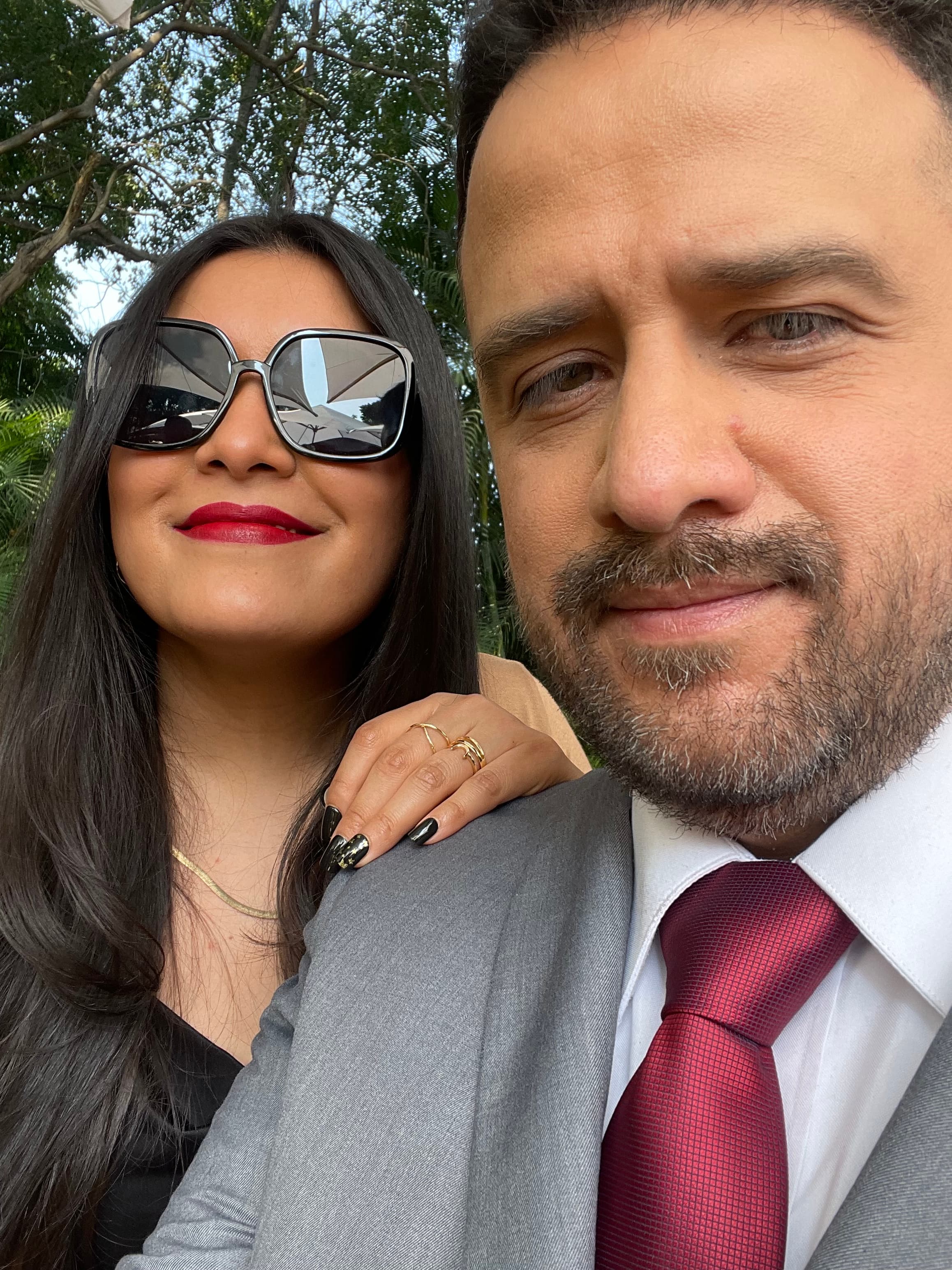
I'm Isaac Chargoy. I live in Mexico City, and I've been building things for as long as I can remember.
My head has always worked the same way: when something is a mess, I want to understand how it is put together and leave it better than I found it. It started with computers because that is what was within reach, but the pull was never the technology itself — it was the chance to turn a tangle into something clear.
Everything else grew out of that: starting companies, leading teams, training people, building products. I have held very different jobs — from personnel training to running an IT department — and in all of them I ended up doing the same thing: straightening out processes, removing friction, and leaving behind systems people could actually use without fighting them.
Today that lives in two projects of my own: Spatium, an organizational planning platform, and Byte City, the studio I founded in 2004 and still run. Both exist for the same reason: I think most teams do not need more tools, they need less chaos.
Outside of work I am a father, a chronic questioner, and someone who still cannot leave a problem half-finished. I care about things being done well, about clarity over sophistication, and about the feeling of actually finishing something. If you are after the technical detail — the stack, the long résumé, the architecture decisions — that lives at chargoy.dev.
A lifelong fascination with computers
My relationship with computers started before I can clearly remember — somewhere around six or seven years old. I was born in 1977, which means I grew up alongside the personal computer itself, learning to program at the same time the machines were learning what they could become. That early spark never faded; it's the same curiosity that drives everything I build today.
- 1983
My first computer: the TRS-80
It began on a Radio Shack TRS-80. No color, no sound, no graphics — just a blinking cursor and the BASIC language. I wrote my first programs there and saved them to 5¼-inch floppy disks. With almost nothing to work with, I learned that logic and imagination were enough to make a machine do what I wanted.
- 1988
Our first IBM PC
We got our first IBM-compatible PC, an IBM PC XT 5160 assembled by BPM, a Mexican company. I kept writing BASIC, but this machine opened new doors: I picked up Pascal, C, and even assembler, and learned my way around DOS. Programming stopped being a curiosity and became a craft.
- 1990s
The Windows years
Through the nineties I moved into Windows on a Compaq and the whole ecosystem that came with it. New interfaces, new tools, new possibilities — and a constant appetite to understand how all of it worked underneath.
- 2000s
The web — and a switch to Apple
The 2000s pulled me into the web: PHP, JavaScript, Flash, and ActionScript, building for the internet of that era. I also switched to Apple with the first G5 iMac, the start of a long relationship with the platform I still build on today.
- Today
Structured software, same passion
From a cursor on a black screen to AI-integrated platforms, the throughline has never changed. The tools evolved — Laravel, Node.js, Vue, Next.js, TypeScript, OpenAI APIs — but the joy of turning complexity into something clear and functional is exactly what it was when I was seven.